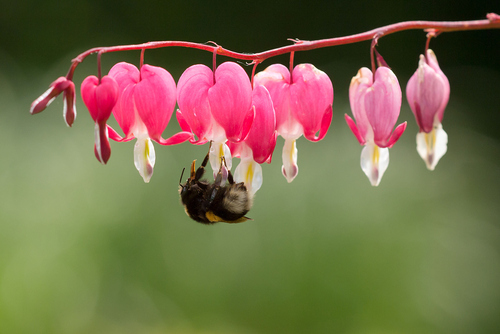
Bleeding Heart
Lamprocapnos spectabilis
Each pendant 'heart' is actually two outer pink petals; pull them apart and you'll find a tiny 'lady in a bath' — two inner white petals fused into a bathtub shape with the stamens as 'her' figure.
How to care for bleeding heart
Goes dormant in summer — don't panic when foliage yellows and disappears by July; that's normal. Plant near hostas or ferns that fill in the gap. Wear gloves; sap can irritate sensitive skin.
Garden uses & design ideas
Best garden use
Use bleeding heart as an early-season woodland showpiece, then surround it with hostas, ferns, or sedges that expand as the bleeding heart naturally goes dormant in summer.
Pair it with
Hostas, Astilbe, Ferns make easy companion choices because they share similar light, water, or visual texture needs.
Layout tip
Match it with part shade exposure, place it in a moderate-water bed where soil can stay evenly damp but not soggy, and check USDA zones 3-9 before planting. Use the garden planner to test spacing around its mature size: 2-3 ft tall, 18-30 in wide. Regional note: In hot climates it needs cool shade and steady spring moisture, then may disappear by midsummer; mark the crown so you do not dig it up by mistake.
Gardener note — Double-check local invasive, edible, and toxicity guidance with your county extension office before planting around pets, children, or natural areas.Regional note: In hot climates it needs cool shade and steady spring moisture, then may disappear by midsummer; mark the crown so you do not dig it up by mistake.Safety note: Foliage and roots can be toxic or irritating if eaten or handled heavily, so wear gloves and keep plant parts out of pet and child play areas.
Companion plants
Bleeding Heart grows well alongside these — similar light, water, and texture needs.
Common pests & problems
Where it grows best
Native to Siberia, China, Japan, Korea; thrives in USDA hardiness zones 3-9.
Frequently asked about bleeding heart
What USDA zones does Bleeding Heart grow in?+
Bleeding Heart is hardy in USDA zones 3-9. Outside these zones, it can usually be grown indoors or as a seasonal annual.
How much sun does Bleeding Heart need?+
Bleeding Heart prefers part shade. Place it where it gets that light most of the day for best growth and flowering.
How often should I water Bleeding Heart?+
Bleeding Heart has moderate water needs. Keep soil consistently moist but not soggy. Goes dormant in summer — don't panic when foliage yellows and disappears by July; that's normal. Plant near hostas or ferns that fill in the gap. Wear gloves; sap can irritate sensitive skin.
How big does Bleeding Heart get?+
Bleeding Heart reaches a mature size of 2-3 ft tall, 18-30 in wide. Growth rate is moderate, so plan spacing accordingly when planting.
What plants grow well with Bleeding Heart?+
Bleeding Heart pairs well with Hostas, Astilbe, Ferns, Coral bells, Brunnera. These companions share similar care requirements and don't compete aggressively for resources.
What pests affect Bleeding Heart?+
Common Bleeding Heart problems include aphids; slugs (on young shoots). Catching early signs in routine inspection prevents most damage.
When does Bleeding Heart bloom?+
Bleeding Heart blooms in mid spring to early summer in pink, white. Deadheading spent flowers (where applicable) often encourages a longer bloom window.
More plants to design with
Pair well with bleeding heart or suit the same spot.
 Perennial
 Perennial
 Perennial
 Perennial
 Perennial
 Perennial