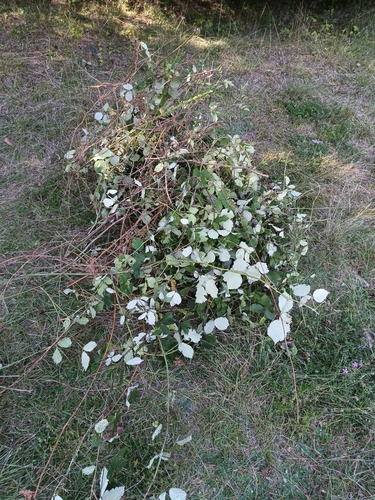
Blackberry
Rubus fruticosus
Wild blackberries are one of the most invasive plants in coastal Pacific Northwest — a single 'Himalayan' blackberry plant can colonize a quarter acre via tip-rooting canes in under 5 years, choking out native vegetation.
How to care for blackberry
Choose thornless cultivars (Triple Crown, Apache, Navaho) for sanity — wild blackberries draw blood. Trellis canes for easy picking. Tip-prune new canes at 4 ft for branching; remove fruited canes at ground level after harvest.
Garden uses & design ideas
Best garden use
Design blackberries as a trellised food-crop row with a mulch strip, picking aisle, and nearby pollinator flowers, not as a loose shrub in a mixed ornamental border.
Pair it with
Apple, Pear, Hazelnut make easy companion choices because they share similar light, water, or visual texture needs.
Layout tip
Match it with full sun exposure, place it in a moderate-water bed where soil can stay evenly damp but not soggy, and check USDA zones 5-9 before planting. Use the garden planner to test spacing around its mature size: 5-8 ft tall canes. Regional note: Choose erect, semi-erect, trailing, or thornless cultivars for your climate and support system; wild or Himalayan-type blackberries can become invasive in mild regions.
Gardener note — Double-check local invasive, edible, and toxicity guidance with your county extension office before planting around pets, children, or natural areas.Regional note: Choose erect, semi-erect, trailing, or thornless cultivars for your climate and support system; wild or Himalayan-type blackberries can become invasive in mild regions.Safety note: Wear gloves around thorny canes, remove spent floricanes after fruiting, and keep pesticide choices compatible with edible harvests and pollinators.
Companion plants
Blackberry grows well alongside these — similar light, water, and texture needs.
Common pests & problems
Where it grows best
Native to Europe (wild species also throughout North America); thrives in USDA hardiness zones 5-9.
Frequently asked about blackberry
What USDA zones does Blackberry grow in?+
Blackberry is hardy in USDA zones 5-9. Outside these zones, it can usually be grown indoors or as a seasonal annual.
How much sun does Blackberry need?+
Blackberry prefers full sun. Place it where it gets that light most of the day for best growth and flowering.
How often should I water Blackberry?+
Blackberry has moderate water needs. Keep soil consistently moist but not soggy. Choose thornless cultivars (Triple Crown, Apache, Navaho) for sanity — wild blackberries draw blood. Trellis canes for easy picking. Tip-prune new canes at 4 ft for branching; remove fruited canes at ground level after harvest.
How big does Blackberry get?+
Blackberry reaches a mature size of 5-8 ft tall canes. Growth rate is fast, so plan spacing accordingly when planting.
What plants grow well with Blackberry?+
Blackberry pairs well with Apple, Pear, Hazelnut, Comfrey. These companions share similar care requirements and don't compete aggressively for resources.
What pests affect Blackberry?+
Common Blackberry problems include spotted wing drosophila; anthracnose; orange rust. Catching early signs in routine inspection prevents most damage.
When does Blackberry bloom?+
Blackberry blooms in late spring in white. Deadheading spent flowers (where applicable) often encourages a longer bloom window.
More plants to design with
Pair well with blackberry or suit the same spot.
 Fruit
Fruit Fruit
Fruit Fruit
Fruit Fruit
Fruit Fruit
Fruit Fruit
Fruit