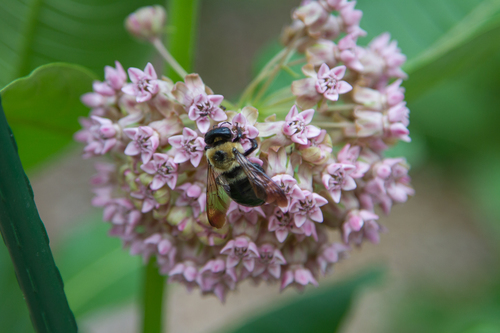
Common Milkweed
Asclepias syriaca
Common milkweed supplies fragrant nectar to many pollinators and foliage for monarch larvae, making a broad colony more useful in a meadow or large pollinator bed than in a tight formal border.
How to care for common milkweed
Leave monarch eggs and caterpillars undisturbed because milkweeds are their larval host plants. Give common milkweed room to naturalize, remove seed pods before they open if spread is unwanted, and keep the foliage unsprayed through the growing season.
Garden uses & design ideas
Best garden use
Use common milkweed where a spreading colony can be contained, such as a sunny back boundary, meadow edge, or wide pollinator strip; place shorter nectar plants in front so its 3-5 ft stems do not block paths or sightlines.
Pair it with
Echinacea, Black-eyed Susan, Joe Pye weed make easy companion choices because they share similar light, water, or visual texture needs.
Layout tip
Match it with full sun exposure, group it with other low-water plants so one irrigation zone can stay lean, and check USDA zones 3-9 before planting. Use the garden planner to test spacing around its mature size: 3-5 ft tall, 1-2 ft wide. Regional note: Common milkweed spreads by underground roots and seed and can outgrow small formal beds; check its local native range and choose a less aggressive locally native Asclepias for compact gardens.
Gardener note — Double-check local invasive, edible, and toxicity guidance with your county extension office before planting around pets, children, or natural areas.Regional note: Common milkweed spreads by underground roots and seed and can outgrow small formal beds; check its local native range and choose a less aggressive locally native Asclepias for compact gardens.Safety note: The milky sap can irritate skin and eyes, and plant parts are toxic if ingested in quantity; wear gloves and keep cut stems away from children, pets, and livestock.
Companion plants
Common Milkweed grows well alongside these — similar light, water, and texture needs.
Common pests & problems
Where it grows best
Native to Eastern and Central North America prairies; thrives in USDA hardiness zones 3-9.
Frequently asked about common milkweed
What USDA zones does Common Milkweed grow in?+
Common Milkweed is hardy in USDA zones 3-9. Outside these zones, it can usually be grown indoors or as a seasonal annual.
How much sun does Common Milkweed need?+
Common Milkweed prefers full sun. Place it where it gets that light most of the day for best growth and flowering.
How often should I water Common Milkweed?+
Common Milkweed has low water needs. Allow the soil to dry between waterings. Leave monarch eggs and caterpillars undisturbed because milkweeds are their larval host plants. Give common milkweed room to naturalize, remove seed pods before they open if spread is unwanted, and keep the foliage unsprayed through the growing season.
How big does Common Milkweed get?+
Common Milkweed reaches a mature size of 3-5 ft tall, 1-2 ft wide. Growth rate is fast, so plan spacing accordingly when planting.
What plants grow well with Common Milkweed?+
Common Milkweed pairs well with Echinacea, Black-eyed Susan, Joe Pye weed, Goldenrod. These companions share similar care requirements and don't compete aggressively for resources.
What pests affect Common Milkweed?+
Common Common Milkweed problems include milkweed aphids; milkweed beetles; monarch caterpillars (beneficial host-plant visitors). Catching early signs in routine inspection prevents most damage.
When does Common Milkweed bloom?+
Common Milkweed blooms in early to mid summer in dusty pink-mauve (fragrant). Deadheading spent flowers (where applicable) often encourages a longer bloom window.
More plants to design with
Pair well with common milkweed or suit the same spot.
 Perennial
 Perennial
 Perennial
 Perennial
 Perennial
 Perennial